



Key takeaways

- Eczema is a chronic skin condition that’s driven by an overactive immune system, while autoimmune diseases occur when the immune system attacks its own healthy tissues.
- Eczema is not an autoimmune disease, but there are notable similarities and connections between the two types of conditions.
- Having eczema increases your risk for developing an autoimmune disease, and people with an autoimmune disease are more likely to develop eczema.
Eczema is a common skin condition that can cause dry skin, itchiness, and rashes. There are seven types of eczema, but the most common form of eczema is called atopic dermatitis.
Although eczema is not an autoimmune disease, it can contribute to immune dysregulation and a heightened immune response, which may worsen eczema symptoms. It can also increase the risk of developing an autoimmune disease. People living with an autoimmune disease are also more likely to develop eczema.
This article will explore the connection between eczema and autoimmune diseases and how the immune system influences the chronic skin condition.
What Is Eczema?
Eczema is the most common inflammatory skin condition. There are seven types of eczema.
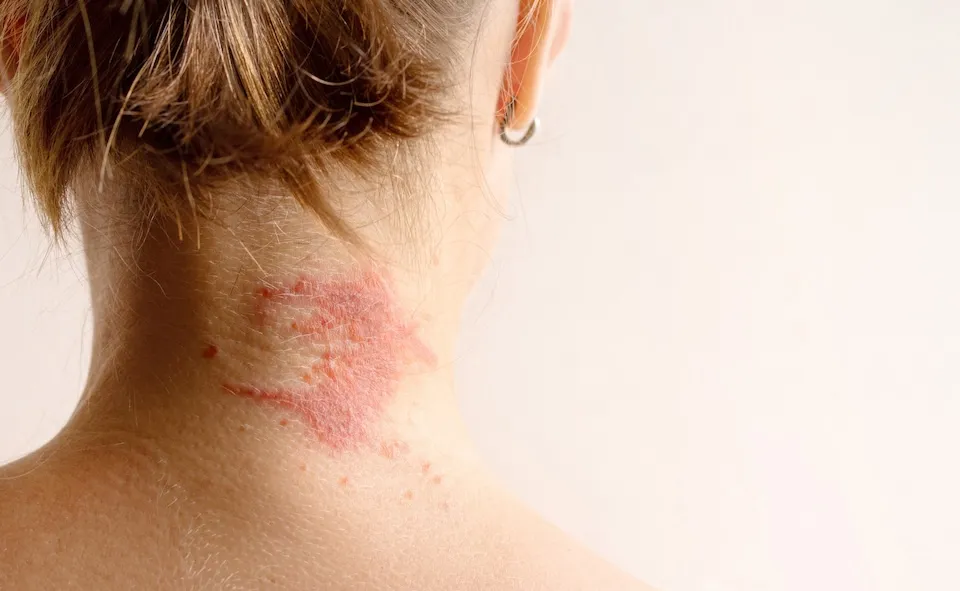
Atopic dermatitis, the most common form of eczema, affects up to 10% of adults in the United States and developed world. Symptoms of atopic dermatitis include itchiness, dry skin, rashes, scaly patches, inflamed skin, discolored bumps, and blisters.
Other forms of eczema include:
- Contact dermatitis: Triggered by an irritant or allergen that touches the skin.
- Dyshidrotic eczema: Small, itchy blisters that form on the tips of fingers, toes and edges of palms and soles of the feet.
- Neurodermatitis: Thick, leather-like patches of skin that can be triggered by stress or irritation and are generally confined to one or two areas of skin.
- Nummular eczema: Coin-shaped plaques that usually appear on the legs.
- Seborrheic dermatitis: Affects oily areas of the body, like the face, nose, eyebrows, especially the scalp. In infants, this type of eczema is known as “cradle cap”.
- Stasis dermatitis: Swelling, redness, and itching that occurs as a result of poor circulation in the legs.
Experts aren’t sure what causes eczema, but some of the factors that contribute to the development of the condition include:
- Genetics, or a family history of the condition.
- Certain environmental triggers.
- Stress.
Is Eczema an Autoimmune Disease?
No, eczema is not an autoimmune disease, it’s an inflammatory skin condition. Eczema is not defined as an autoimmune disease because the immune system does not attack a specific target in the body the way it does in people with autoimmune diseases.
However, the immune system does play a role in the skin condition. A dysregulated or overactive immune system can contribute to or exacerbate eczema symptoms.
One scientific article also suggests that people with atopic dermatitis (the most common form of eczema) have genetically altered immune responses that affect their skin’s barrier.
Another reason some people conflate eczema with an autoimmune condition is the cycle in which eczema symptoms come and go. People with eczema may experience symptoms only in the winter months or when exposed to a specific trigger, after which they can be symptom-free for several months.
Many autoimmune conditions, like irritable bowel disease (IBD) or psoriatic arthritis, are also marked by periods of flare-ups and remission.
What Does It Mean to Have an Autoimmune Disease?
In autoimmune diseases, the immune system attacks healthy cells in your body by mistake. This can affect cells, tissues, and organs throughout the body. These attacks can cause a variety of symptoms, including weakening bodily functions.
There are over 80 different types of known autoimmune diseases. Some are more common and easier to diagnose than others. Examples of autoimmune diseases include:
- Alopecia areata.
- Inflammatory bowel disease (IBD).
- Hyper and hypothyroidism.
- Lupus.
- Multiple sclerosis.
- Psoriasis.
- Psoriatic Arthritis.
- Rheumatoid arthritis.
- Type 1 diabetes.
Not all autoimmune diseases have known causes, but research suggests that many of these conditions are influenced by several factors, including genetics, environmental exposures, sex, race, and ethnicity.
Most autoimmune diseases are chronic, meaning those affected have to manage symptoms throughout their lifetimes. But with the right treatment and lifestyle adjustments, many people with autoimmune diseases will experience extended periods of remission.
The Difference Between Eczema and Autoimmune Diseases
People with autoimmune diseases have immune systems that mistakenly attack healthy cells, tissues, and organs in their body.
People with eczema, on the other hand, may have immune systems that act abnormally and contribute to their symptoms, but their immune systems do not mistakenly target healthy cells in their body.
This is sometimes referred to as the difference between an “autoimmune” and “immune” response. A healthy immune system will only target foreign pathogens and invaders, like viruses or bacteria, sometimes referred to as a healthy “immune response.” Whereas an “autoimmune response” will attack normal, healthy body tissues.
Can Eczema Lead to Autoimmune Conditions?
Yes, having eczema can increase the risk of autoimmune conditions.
Research shows that people with atopic dermatitis are more likely to develop certain autoimmune conditions, including:
- Alopecia areata.
- Psoriatic arthritis.
- Sjögren’s syndrome.
- IBD.
- Vitiligo.
- Rheumatoid arthritis.
- Hypothyroidism.
People with autoimmune conditions are also more likely to develop eczema, especially if their autoimmune condition involves the skin or gastrointestinal (GI) system, like:
- Alopecia areata.
- Psoriasis.
- Vitiligo.
- IBD.
- Celiac disease.
Research also suggests that if you have multiple autoimmune diseases, your risk for developing eczema increases.
The Skin Deep Summary

- Though there are some similarities between autoimmune diseases and eczema, like experiencing flare-ups and periods of remission, eczema is not an autoimmune disease.
- Eczema is an inflammatory skin condition that can be influenced by changes in the immune response.
- Autoimmune diseases occur when the immune system attacks healthy cells and tissues in the body, a process that does not occur in people with eczema.
- If you have eczema, there are several treatments that can help to bring you relief. Connect with a top-notch provider to find the right treatment for you. Dermatology experts at Zest will help you soothe, manage, and prevent your symptoms with individualized treatment plans that cater to your needs and lifestyle. Better yet, book a virtual appointment within days.
Get fast, expert-backed online eczema treatment and virtual dermatology care with Zest. Book a next-day appointment, message your dedicated care team 24/7, and get specialized support.
Learn moreGet fast, expert-backed online psoriasis treatment and virtual dermatology care with Zest. Book a next-day appointment, message your dedicated care team 24/7, and get specialized support.
Learn moreSources
- What is Eczema? (2025, January 27). National Eczema Association.
- Atopic Dermatitis. (2023, August 8). StatPearls.
- Eczema (Atopic Dermatitis). (2024, August 27). National Institute of Allergy and Infectious Diseases.
- Atopic Dermatitis: A Disease of Altered Skin Barrier and Immune Dysregulation. (2012, July 1). Immunological Reviews.
- Autoimmune Disease. (2025, January 31). National Institute of Environmental Health Sciences.
- Atopic dermatitis and risk of autoimmune diseases: a systematic review and meta-analysis. (2021, September 25). Allergy, Asthma & Clinical Immunology.
- Association between atopic dermatitis and autoimmune diseases: a population-based case-control study. (2021, August). British Journal of Dermatology.
FAQs

Zest Health is the first virtual dermatology clinic specialized for psoriasis and eczema. Zest Health can be your main dermatology provider, or you can use it between visits with your regular doctor. Zest is designed to improve outcomes for psoriasis and atopic dermatitis with customizedhigh touch clinical care.
Zest Health focuses exclusively on psoriasis and eczema — two of the most common and complex chronic inflammatory skin conditions. We offer deep expertise and tailor treatment plans to your unique symptoms, history, and lifestyle. Treatment plans go beyond symptom relief to identify and address the underlying causes and triggers of flares.
Zest is designed for people living with chronic skin conditions like eczema and psoriasis who need ongoing, specialized care. Organizations that partner with Zest gain a way to improve access and outcomes for their members without over reliance on prescription medications. Individuals seeking care for other skin concerns are not a fit for our program today.


Ready to find relief?
Book a visit and take the first step toward a treatment plan built just for you.