


Key takeaways

- Scalp psoriasis often looks like thick, silvery scales on inflamed skin and may extend beyond the hairline, while seborrheic dermatitis typically features thinner, yellowish scales that are confined to the scalp and nearby areas.
- Scalp psoriasis is caused by an overactive immune response, while seborrheic dermatitis is commonly associated with excess oil production and yeast overgrowth.
- While seborrheic dermatitis often responds well to antifungal shampoos and topical treatments, scalp psoriasis may require more in-depth therapies, including corticosteroids, phototherapy, or systemic medications for severe cases.
Psoriasis can develop on your scalp and in other places, such as your elbows, knees, and nails. Seborrheic dermatitis only appears on the scalp. Scalp psoriasis scales also tend to be thicker.
Over-the-counter shampoos and medications can relieve symptoms of seborrheic dermatitis, whereas scalp psoriasis may require more extensive treatment.
Keep reading to learn more about scalp psoriasis and seborrheic dermatitis. Discover the differences, methods of diagnosis, and treatments.
What Is Scalp Psoriasis?
Psoriasis is a chronic skin condition that happens when the body produces new skin cells too quickly. Rather than the new cells taking several weeks to grow, they grow in days.
The rapid growth causes the cells to build up on the skin's surface and form thick, scaly patches called plaques. These can appear anywhere on the body but are most common on the knees and elbows.
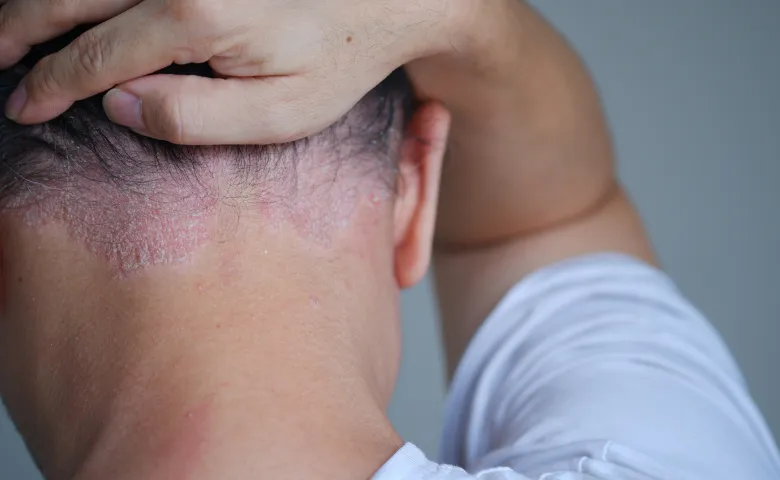
When psoriasis develops on the head under the hairline, health professionals refer to it as scalp psoriasis. It can affect the entire scalp or only occur in small patches. Sometimes, scalp psoriasis extends beyond the hairline to the forehead, back of the neck, or behind the ears.
Scalp psoriasis is not contagious and often requires ongoing management to reduce symptoms.
Symptoms
Scalp psoriasis symptoms can come and go and range from mild to severe. Some individuals only have occasional mild flares, while others have frequent and more severe outbreaks.
Common signs include:
- Reddish patches on the scalp
- Silvery-white scales and dandruff-like flaking
- Dry scalp that sometimes cracks and bleeds
- Mild to severe Itching
- Bleeding from scratched areas
- Burning or soreness
- Temporary hair loss from excessive scratching
Causes
Psoriasis, including scalp psoriasis, happens when the immune system mistakenly attacks healthy skin cells. This triggers the body to make new skin cells at a faster rate, creating the build-up of the scaly plaques.
Genetics plays a significant role in the development of psoriasis. If your family member has psoriasis, there is a higher likelihood that you may develop the condition.
Certain factors can trigger scalp psoriasis flare-ups. Common triggers include:
- High-stress level
- Skin injuries such as scrapes, bug bites, or severe sunburns
- Having an infection, like strep throat
- Medications like lithium, prednisone, and hydroxychloroquine
- Cold, dry weather
- Tobacco and heavy alcohol use
What Is Seborrheic Dermatitis?
Seborrheic dermatitis is a skin condition that causes a scaly rash on oily areas of the body. Common areas include the scalp, forehead, eyebrows, ears, and sides of the nose.
Anyone can develop this condition, but it is more common in infants and adults over 40. In babies, health professionals often refer to it as cradle cap.
Seborrheic dermatitis is not contagious and sometimes goes away on its own without treatment. However, sometimes, it’s beneficial to use a medicated shampoo or antifungal cream, depending on your healthcare provider’s recommendation.
Symptoms
Common signs include dry or greasy flaking skin that sometimes burns or has mild to moderate itching. Other symptoms depend on the location of the rash:
- Eyelid rash: Swollen and itchy eyelids, sometimes with yellowish scales between the eyelashes.
- Ear rash: Crusting, cracks, and oozing.
- Skin fold rash: Appears in areas like armpits, under breasts, or the belly button, causing pain, tenderness, and sometimes infection if untreated.
Causes
Experts are still researching the exact cause of seborrheic dermatitis. However, they believe it’s linked to yeast and excess oil on the skin.
Skin naturally has yeast on it, but some people may develop a reaction to it. The skin also naturally produces oil, but it may encourage yeast overgrowth if your body makes too much.
Anyone can develop seborrheic dermatitis, but certain factors may increase your risk, such as:
- Rosacea or psoriasis
- Depression or other mood disorders
- Parkinson’s disease
- HIV infection
- Brain or spinal cord injury
- Lymphoma
- Down syndrome
- Anorexia nervosa
- Stroke or heart attack
- Organ transplant recipients
- Heavy alcohol use
What’s the Difference Between Scalp Psoriasis and Seborrheic Dermatitis?
Here are the main differences between scalp psoriasis and seborrheic dermatitis.
Diagnosis & Tests
If you have concerns about flaking and itching on your head, it’s a good idea to seek the expertise of a dermatologist.
The dermatologist can assess the appearance of your scalp and any other affected areas. They can usually tell the difference between the two conditions by looking at the skin.
If they are uncertain, the dermatologist may take a small sample of your skin, called a skin biopsy. They can look at the sample under a microscope, which can also help rule out other skin disorders.
The dermatologist may also ask questions about your medical history. This may include questions about your personal or family history of psoriasis, autoimmune diseases, or neurological conditions.
Treatment Options
Treatment options depend on which skin condition you are experiencing.
Scalp Psoriasis
Treatment for scalp psoriasis typically manages flare-ups with medicated shampoos, topical treatments, or systemic medications.
Dermatologists often prescribe corticosteroid solutions, foams, gels, shampoos, or sprays. Some research suggests that using corticosteroids along with vitamin D improves symptoms greater than using corticosteroids alone.
Scale softeners containing salicylic acid can help remove thick scales.
If you have a severe case, your healthcare provider may suggest corticosteroid injections or biologics that target your immune system.
Light therapy with controlled UVB exposure can also be helpful. However, it can be difficult when hair is in the way. Using a blow dryer to move the hair can help expose the scalp to UVB light.
Connect with a Zest dermatologist to start treating scalp psoriasis today!
Seborrheic Dermatitis
Treatment focuses on reducing the rash, itching, and flaking. It often includes using medicated shampoos containing antifungal or anti-inflammatory ingredients like zinc, ketoconazole, or ciclopirox.
If you have an outbreak in an area not covered in hair, your healthcare provider may also prescribe topical antifungal creams, corticosteroids, or calcineurin inhibitors to reduce inflammation.
Your medical provider will advise you on how often you need to shampoo your hair each week or apply the antifungal creams.
If your infant has cradle cap, the typical recommendations include cleansing the area with baby shampoo and gently removing the scales.
Connect with a Zest dermatologist to start treating seborrheic dermatitis today.
FAQs
How can you tell the difference between scalp psoriasis and seborrheic dermatitis?
Scalp psoriasis typically causes thicker, silvery-white scales and may extend beyond the hairline, while seborrheic dermatitis appears as greasy, thinner scales with redness and itching in oily areas.
Can I use psoriasis shampoo for seborrheic dermatitis?
Yes. While the two conditions are distinct, they share a similar problem of excessive scaling and scalp inflammation. Utilizing a shampoo with scalp exfoliants like salicylic acid or anti-inflammatory ingredients like coal tar can be helpful for both conditions.
Why do I suddenly get psoriasis on my scalp?
Scalp psoriasis can develop suddenly due to triggers like stress, infections, or changes in the immune system, particularly if you have a genetic predisposition to psoriasis.
The Skin Deep Summary

Scalp psoriasis and seborrheic dermatitis are two distinct conditions that can cause itching, scaling, and discomfort.
Scalp psoriasis results from an overactive immune system, leading to thick, silvery plaques that sometimes spread beyond the hairline. In contrast, seborrheic dermatitis is characterized by greasy scales and is linked to excess oil production and yeast overgrowth.
While both conditions can be managed, treatments differ.
Understanding the differences in appearance, causes, and treatments is essential for effective management and symptom relief.
If you’re noticing flaking, and itching, or redness on your scalp, connect with a dermatology provider, like one at Zest. They can identify the condition and work with you to develop a good treatment plan.
Get fast, expert-backed online eczema treatment and virtual dermatology care with Zest. Book a next-day appointment, message your dedicated care team 24/7, and get specialized support.
Learn moreGet fast, expert-backed online psoriasis treatment and virtual dermatology care with Zest. Book a next-day appointment, message your dedicated care team 24/7, and get specialized support.
Learn moreSources
- Mosca, M., et al. (2021). Scalp Psoriasis: A Literature Review of Effective Therapies and Updated Recommendations for Practical Management. Dermatol Ther (Heidelb).
- Psoriasis Overview. (n.d.). American Academy of Dermatology Association.
- Scalp Psoriasis: Overview. (n.d.). American Academy of Dermatology Association.
- Seborrheic Dermatitis: Overview. (n.d.). American Academy of Dermatology Association.
- Tucker, D., et al. (2024). Seborrheic Dermatitis. Stat Pearls.
FAQs

Zest Health is the first virtual dermatology clinic specialized for psoriasis and eczema. Zest Health can be your main dermatology provider, or you can use it between visits with your regular doctor. Zest is designed to improve outcomes for psoriasis and atopic dermatitis with customizedhigh touch clinical care.
Zest Health focuses exclusively on psoriasis and eczema — two of the most common and complex chronic inflammatory skin conditions. We offer deep expertise and tailor treatment plans to your unique symptoms, history, and lifestyle. Treatment plans go beyond symptom relief to identify and address the underlying causes and triggers of flares.
Zest is designed for people living with chronic skin conditions like eczema and psoriasis who need ongoing, specialized care. Organizations that partner with Zest gain a way to improve access and outcomes for their members without over reliance on prescription medications. Individuals seeking care for other skin concerns are not a fit for our program today.


Ready to find relief?
Book a visit and take the first step toward a treatment plan built just for you.