
What Is Psoriasis? Understanding Your Skin and How to Care for It

Puntos Clave
- Psoriasis is a chronic condition driven by an overactive immune system — not by anything you did or didn't do
- Flares are often tied to predictable triggers like stress, illness, and skin injuries — and learning yours puts you in the driver's seat
- A combination of consistent skincare, targeted treatment, and inside-out support can help you spend more time in remission and less time in a flare
Living with psoriasis can feel unpredictable — especially when a flare shows up without much warning. You might notice thick, raised, or flaky patches on your skin and wonder what you did to cause it. The answer, simply put, is nothing. Psoriasis is a medical condition, not a reflection of your habits or hygiene.
What does make a difference is understanding what's happening beneath the surface. When you know why your skin behaves the way it does, the path forward becomes a lot clearer. That's what this guide is here for.
What’s Actually Happening to Your Skin
Psoriasis is a chronic (long-term) skin condition driven by the immune system. Normally, skin cells grow deep in the skin and slowly rise to the surface over about a month. With psoriasis, that process speeds up dramatically — cells multiply in days instead of weeks.
Because they grow so fast, skin cells pile up before they can shed. That's what forms the raised, scaly patches you can see and feel. This rapid turnover also weakens your skin barrier — the outermost layer of skin that holds moisture in and keeps irritants out. When the barrier breaks down, it can set off a cycle of inflammation, itching, and dryness that feels hard to escape.
Psoriasis naturally moves between flares — when symptoms are more active — and calmer periods called remission. Both are a normal part of the condition. And with the right routine, those calmer periods can last longer.
What Psoriasis Can Look Like
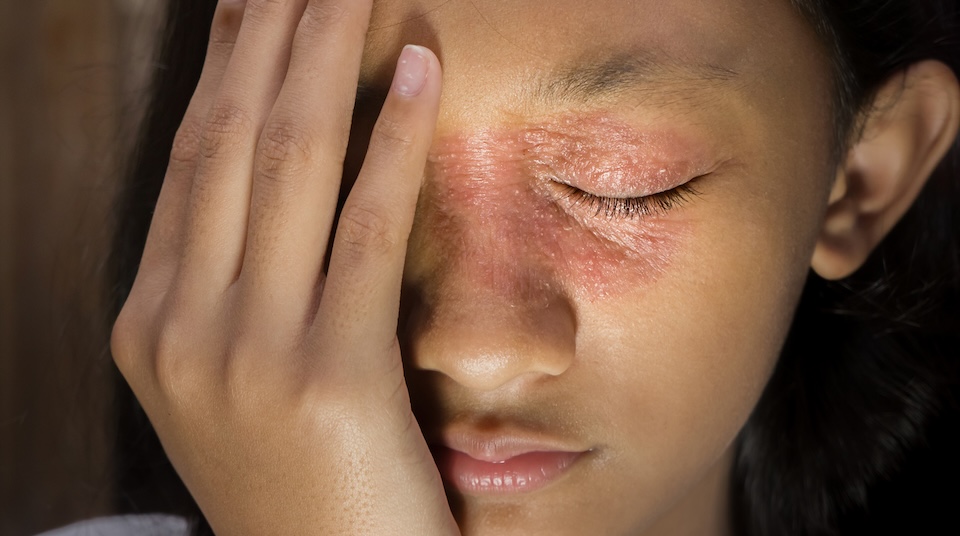
Psoriasis doesn't look the same for everyone, and that's worth knowing. On lighter skin tones, it often shows up as pink or red patches with silvery-white scales. On darker skin tones, patches may appear purplish, grayish, or dark brown — and scales may look more gray than silver.
The most common forms include:
- Plaque psoriasis — The most common form. Raised, dry plaques covered in scales, most often on the elbows, knees, lower back, and scalp.
- Inverse psoriasis — Found in skin folds like the underarms, groin, or under the breasts. Appears as smooth, inflamed patches that can worsen with friction and sweat.
- Guttate psoriasis — Often triggered by an infection like strep throat. Causes small, drop-shaped spots across the torso, arms, and legs.
If you're not sure which type you have, your Zest care team can help you figure it out.
What Triggers a Flare
Flares rarely come out of nowhere. They're almost always connected to something that stirs up inflammation in the body. Triggers vary from person to person, but some of the most common ones include:
Learning your personal triggers is one of the most empowering steps you can take. It shifts the focus from reacting to flares to getting ahead of them.
How to Manage Psoriasis
Managing psoriasis is a two-part process: calming active inflammation from the outside while supporting your body from the inside. Your Zest care plan is built around three pillars to help you stay comfortable and keep calm stretches lasting longer.
1. A Gentle Daily Skincare Routine
A consistent routine is the foundation of barrier repair. Here's what that can look like:
- Bathing — Keep showers short and use lukewarm water. Choose mild, fragrance-free cleansers and skip anything with harsh dyes or essential oils. When drying off, pat your skin gently — never rub.
- Moisturizing — Apply a rich moisturizer within 3 minutes of stepping out of the shower, while your skin is still slightly damp. This helps lock in hydration before it evaporates. Ointments and thick creams tend to work best. You can find provider-approved options in the Zest Marketplace.
2. Targeted Flare Support
When a flare hits, your prescribed topicals are your first line of support. Apply your prescription treatment directly to the affected areas first, letting it absorb before layering on moisturizer. For sensitive areas like the face or skin folds, your provider will recommend gentler options — just ask.
3. Inside-Out Support
Because psoriasis starts with immune system activity, what you do beyond skincare can also make a real difference.
- Supplements — Research suggests that Vitamin D, Omega-3 fatty acids, and turmeric (curcumin) may help support immune health and reduce systemic inflammation. Talk to your provider about what might make sense for your specific situation.
- Stress management — Stress is one of the most common flare triggers — and one you can actively work with. Tools like mindfulness, cognitive behavioral therapy (CBT), or acupuncture may help lower inflammation and support your overall wellbeing. Your Zest care team can help you find what fits your life.
Have questions about your care plan, your triggers, or what to try next? Your Zest care team is here — reach out through your portal anytime.

Resumen de Piel Profunda
Psoriasis is a long-term condition, but it doesn't have to define your day-to-day life. Understanding what's happening in your skin, knowing your triggers, and staying consistent with your routine are what make the biggest difference over time.
At Zest, we're in this with you — whether you're navigating a tough flare or settling into a calm stretch. Your care team is here to help you adjust your plan, answer your questions, and keep you moving toward lasting comfort.