
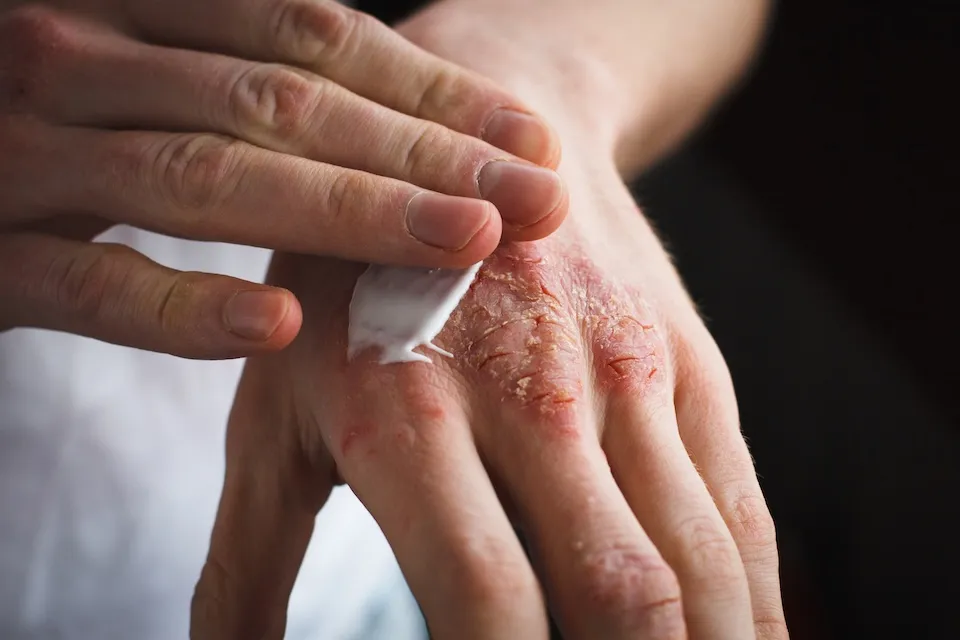
Managing Skin Flares

Key takeaways
- When a flare hits, the goal involves three things: soothe the inflammation, repair your skin barrier, and understand what triggered it so you can get ahead of it next time.
- Learning your personal triggers is one of the most important steps you can take. It shifts the focus from reacting to flares to preventing them.
- Eczema and psoriasis are long-term conditions. Managing them is an ongoing partnership between you and your care team, not something you have to figure out alone.
If you have eczema or psoriasis, you have probably experienced this cycle: things improve, then something shifts and a flare sets in. It feels unpredictable and frustrating, especially when you are doing everything right.
Both eczema and psoriasis are long-term conditions that naturally go through periods of flares and calmer periods when skin settles. That is not a failure. It is how these conditions work. With the right tools, you manage flares more confidently and keep the calm periods lasting longer.
Understanding Skin Flares
While eczema and psoriasis are different conditions, they share a common pattern. Flares happen when inflammation rises and the skin barrier breaks down. Managing a flare means addressing both: calming the inflammation and helping your skin repair itself.
Understanding what triggered your flare is just as important. Your Zest care team helps you connect the dots and customize a plan based on your goals and how your skin responds.
Your Daily Skin Care Foundation
A consistent daily routine is one of the most effective ways to support your skin between flares and to recover faster when they happen.
Bathing:
- Bathe daily or every other day with lukewarm water. Keep it short.
- Use gentle, fragrance-free cleansers. Avoid products with added fragrances, dyes, or essential oils.
- When drying off, gently pat your skin dry with a soft towel. Do not rub.
Moisturizing:
- Apply within 3 minutes of bathing. While your skin is still slightly damp, apply moisturizer to lock in hydration before it evaporates.
- Apply liberally. Cover your entire body at least once daily, and more often whenever skin feels tight or dry.
- Choose what you will actually use. Ointments tend to be more effective, but the moisturizer you use consistently is the right one for you. Talk to your care team about what fits your routine.
When You Are in a Flare
When a flare is active, your prescribed medication is your most important tool. Apply it directly to affected areas once or twice daily as directed by your provider. Always apply your prescription medication first, then moisturize the rest of your body.
- Sensitive areas. For areas like your face, skin folds, and groin, your care team may prescribe medications specifically formulated for those areas. Always follow their guidance.
- Wet wrap therapy. During more intense flares, applying medication and moisturizer, then covering treated areas with wraps, may help lock in moisture and calm the skin. If this is relevant for you, your care team walks you through exactly how to do it.
Getting to Know Your Triggers
Most flares are linked to one or more triggers. Learning yours is one of the most empowering things you can do — because once you know what sets your skin off, you can start getting ahead of it.
Not sure what’s triggering your flares? Your care team can help you track patterns and build a proactive plan.
Have questions about managing your flares or want to review your current care plan? Your Zest care team is here whenever you need them. You can also find recommended products in the Zest Marketplace.

The Skin Deep Summary
Managing eczema and psoriasis is not about avoiding every flare. It is about building the habits and knowledge to get through them faster and keep the calm periods lasting longer.
A consistent daily routine, a better understanding of your triggers, and the right medications working together make a real difference in how your skin feels day to day. Your Zest care team is here to help you adjust your routine, fine-tune your treatment plan, and build a proactive strategy that puts you in control.