
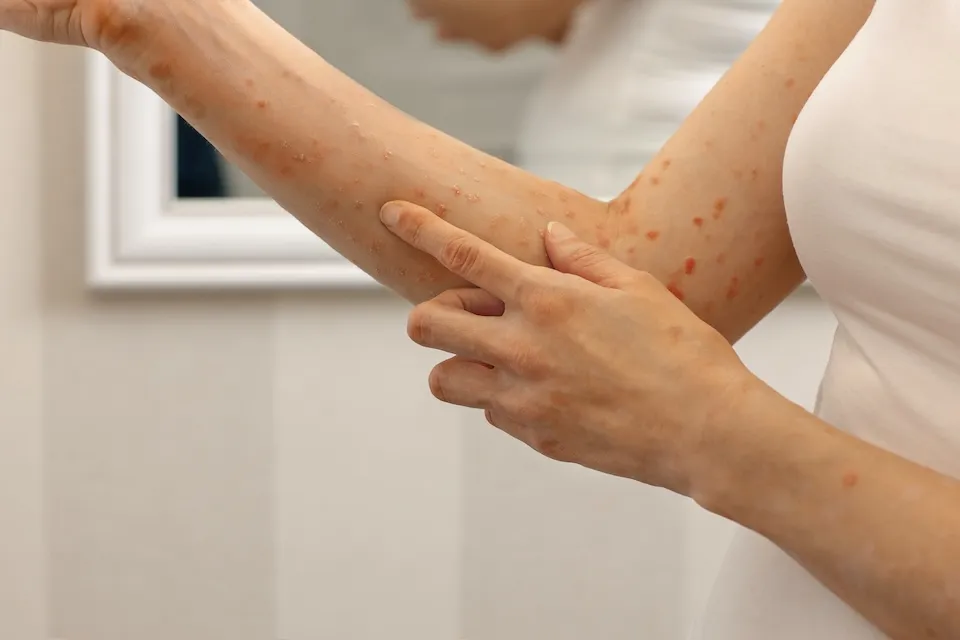
Signs of a Skin Infection: What to Watch For and When to Act

Key takeaways
- Eczema flares are usually itchy. But an infection often feels different: painful, burning, or tender. The shift in sensation is an important signal worth paying attention to.
- Honey-colored crusting, yellow or green discharge, or sores that spread rapidly are signs that your skin may be infected and needs medical attention.
- If your skin stops responding to your usual treatments, or if you develop a fever, do not wait. Reach out to your care team right away.
For people with eczema or psoriasis, the skin barrier is often compromised. That means bacteria and viruses enter more easily, especially through areas that are broken or have been scratched. When this happens, a flare can turn into an infection.
Knowing the difference matters because infections do not respond to the same treatments as flares. If you notice any of the signs below, reaching out to your care team quickly makes a difference.
Signs of a Bacterial Infection
Bacterial skin infections, often caused by Staph (Staphylococcus aureus), can develop when bacteria enters through broken skin. Signs to look for:
- Honey-colored crusting. One of the most recognizable signs of a bacterial skin infection. If you see yellowish, crust-like patches, contact your care team.
- Pus-filled blisters. Yellow or white fluid-filled bumps on or around the affected area.
- Weeping or oozing skin. Skin that looks persistently wet or is releasing discharge.
- Increased warmth or throbbing. The skin feels hot to the touch or has a pulsing sensation.
- Swollen glands. Swelling in the neck, armpits, or groin near the affected skin can signal your body is fighting an infection.
Signs of a Viral Infection
A viral skin infection called eczema herpeticum occurs when the herpes virus enters through broken skin. It is less common but moves quickly, so recognizing it early is important:
- Small, circular sores. Painful, punched-out-looking erosions that may appear in clusters.
- Grouped blisters. Small fluid-filled blisters similar to cold sores, often appearing together.
- Rapid spread. The rash spreads much faster than a typical flare.
- Fever or feeling unwell. High fever and general unwellness alongside a skin rash are a red flag that needs immediate attention.
Flare vs. Infection: A Quick Reference
How to Help Prevent Infections
Keeping your skin barrier as strong as possible is your best protection. A few habits that help:
- Moisturize within 3 minutes of bathing. Applying moisturizer to damp skin helps seal in hydration and protect the barrier.
- Keep nails short. This reduces skin damage from scratching, which creates entry points for infection.
- Consider diluted bleach baths. Only if recommended by your provider. When used correctly, these help reduce bacteria on the skin and lower infection risk.
- Do not share topical products. Avoid dipping fingers directly into tubs of cream. Use a clean spatula or spoon to prevent introducing bacteria.
When to Contact Your Care Team
Reach out right away if:
- Your eczema or psoriasis stops responding to your usual treatments
- You notice honey-colored crusting, yellow discharge, or rapidly spreading sores
- You develop a fever, chills, or swollen lymph nodes
When in doubt, reach out. It is always better to check in early than to wait.
Your Zest care team is here through your portal whenever you need them.

The Skin Deep Summary
A compromised skin barrier means infections develop more easily. But they are also very treatable when caught early. Knowing what to look for and acting quickly is the most important thing you can do.
Your Zest care team is here to help you tell the difference between a flare and an infection and to get you the right treatment fast. Do not hesitate to reach out if something feels off.