



Key takeaways

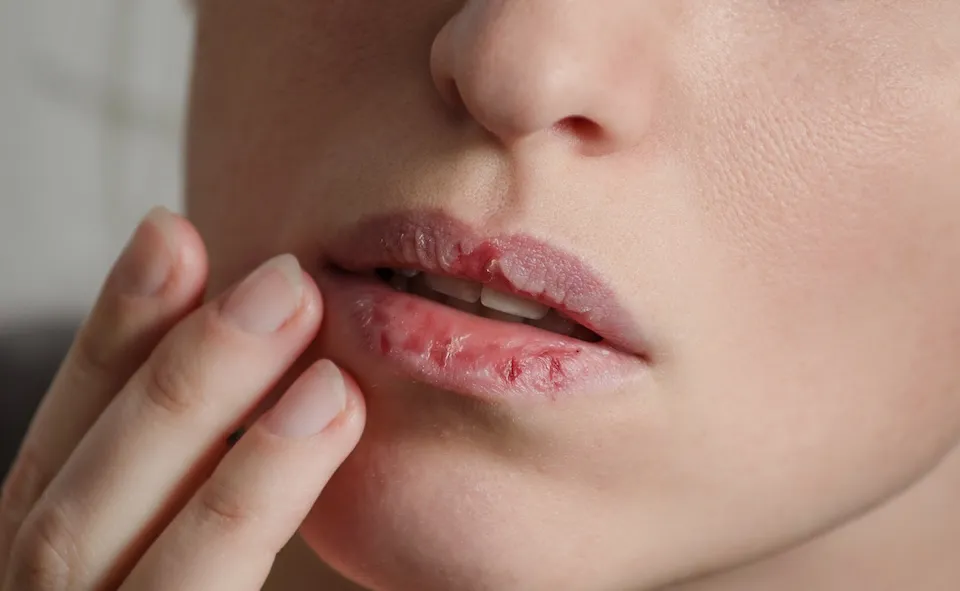
- Lip eczema is a condition where eczema affects the area around your lips or the lips themselves. Eczema is a chronic skin condition where skin becomes irritated and inflamed, resulting in redness, flaking, cracking, and discomfort.
- Lip eczema can occur alongside eczema on other areas of the body, or someone can experience lip eczema on its own.
- Treatment involves a short course of topical steroids, non-irritating lip moisturizers, avoidance of products and ingredients that can trigger eczema, and lifestyle changes to reduce the risk of flares, such as stress management.
We may be used to getting dry, flakey lips around wintertime when there’s cold air all around. But sometimes, the fix isn’t just a swipe or two of lip balm, though that can certainly help. It’s possible that the source of lip irritation is lip eczema. “Eczema can appear anywhere on the body, including the lips and the area around the lips,” says Deanna Moore, NP-C, nurse practitioner at Zest Health. Keep reading to learn more about lip eczema, including the symptoms, common causes, treatments, and tips for keeping lips soft and flake-free.
What Is Lip Eczema?
So can you get eczema on your lips? Lip eczema is a term that means eczema that affects the lips or skin around the lips. “Eczema is irritation and inflammation of the skin—and lips are part of the skin,” says Moore. Lip eczema is often associated with eczema that affects other areas of the body, she says.
Because eczema is a chronic condition, lip eczema can come and go depending on your exposure to triggers in your environment like the weather, psychological stress, and daily habits, such as using a specific skin product.
Symptoms of Lip Eczema
Here’s what you may see and experience on the lips, around the lips, or in the corners of the mouth, says Moore:
- Cracking and bleeding
- Dryness
- Flaking
- Itching
- Redness
- Soreness or pain
- Swelling, in more severe cases
Although lip eczema may also be accompanied by eczema in other areas of the body—the face, hands, inside the elbows, and behind the knees, are the most common sites for eczema in general—it’s possible to have eczema only on your lips, says Moore. The skin condition is highly individual, which is why it’s so beneficial to see a provider if you’re dealing with these symptoms. (More on that below.)
Causes of Lip Eczema
Eczema is caused by a variety of factors, including genes, environmental triggers like irritants and allergens, and an overactive immune system response. This all results in dysfunction of the skin barrier, the top layer of the skin called the stratum corneum. When the skin barrier is disrupted, skin loses moisture and allows irritants in, resulting in an itchy rash. According to Moore, some of the common irritants include:
- Licking your lips (called lip licker’s dermatitis or lip licking eczema)
- Biting your lips
- Lipstick, lip gloss, lip plumper, and other lip products. Certain ingredients are more likely to contribute to reactions like castor oil, benzophenone-3, gallate, wax, and colophony, according to research.
- Oral care products like mouthwash and toothpaste that contain sodium lauryl sulfate.
- Allergens, including environmental, food, or certain medications. Research suggests that people who test positive for allergies are more likely to have symptoms like red, swollen lips.
Is it Lip Eczema or Another Condition?
Lip inflammation and irritation can be a feature of several different skin conditions, including:
- Actinic cheilitis, a “precancer” found on the lips caused by chronic sun exposure.
- Allergic contact dermatitis (a reaction to allergens that come into contact with lips like ingredients in lip products or skin care).
- Angular cheilitis (severe cracking at the corners of the mouth due to yeast infection and nutritional deficiencies, among others).
- Chapped lips
- Eczema
- Infection, such as viral (like cold sores) or bacterial (like staph)
- Medication, such as oral retinoids that cause lip redness and scaling as a side effect.
- Rare conditions like glandular cheilitis or cheilitis granulomatosis that cause chronic lip inflammation with symptoms like swelling.
With so many potential causes, this is precisely why seeing a dermatology provider for an evaluation is so important. “You and your provider can talk about the root cause, which is going to be more effective in treatment and prevention than trying to do this by yourself,” says Moore. Each of these causes will require different treatment to be effective, so understanding exactly what’s going on is key. Sometimes, if an allergic reaction is suspected, your provider may recommend additional testing, such as patch testing, to identify allergens.
How to Treat Lip Eczema
Lip eczema comes and goes, and it can be triggered by many things. Taking a well-rounded approach to treatment is your best bet to bring comfort to red, painful, flakey lips. Here are the medical and lifestyle options:
Medical Treatments
Your dermatology provider may recommend a topical steroid. “This is the first-line treatment for lip eczema. It helps to reduce the inflammation associated with eczema,” says Moore. These are used for a short, limited period of time. Sticking to a short course of steroids will help reduce the risk of side effects of the medication, such as steroid withdrawal or periorificial dermatitis, an acne-like rash. A provider may recommend using them anywhere from a few days to a few months at a time, depending on your individual needs.
Best Moisturizers for Lip Eczema
Another cornerstone of treatment for lip eczema is hydration. “We like petrolatum-based lip moisturizers,” says Moore. These types of balms create a non-irritating occlusive coating on lips to lock in moisture, allowing the skin on and around the lips the opportunity to heal. Two options Moore recommends include:
- Aquaphor Lip Repair
- Vaseline Lip Therapy
One thing you want to avoid is scrubbing your lips to remove flaking. This can worsen cracks and irritation—and cause pain, too. Be gentle with your lips.
Home Remedies and Lifestyle Adjustments
A healthy lifestyle goes a long way in caring for your skin overall and treating lip eczema. That may also include making potential dietary changes if an allergen is suspected. “I recommend that patients stay well-hydrated, decrease their stress levels, and consume a well-balanced diet that limits their intake of added sugar and highly processed foods,” says Moore.
Preventing Lip Eczema Flare-Ups
Once you have lip eczema under control, you’ll want to do what you can to keep them soft, supple, and irritation-free. Here’s what you can do to sidestep flare-ups:
- Identify any irritants: Is there something in your current routine that’s the trigger for your lip eczema symptoms? Since so many things go on and around your lips–lip products, oral health products, skin care, food—it can be difficult to pinpoint the culprit. This may take some trial and error. You might try to eliminate certain products one by one to see if your symptoms improve. You can also go on a lip product “elimination diet” and eliminate all products that may come in contact with your lips, reintroducing them slowly, one at a time, watching for irritation.
- Avoid irritating lips: Once you’ve identified triggers, you can do your best to avoid them. That includes products used on or around lips or allergens that cause irritation, as well as habits like frequent licking or biting your lips. That said, it can be tough to stop yourself from licking or biting your lips, especially if you don’t realize you’re doing it. Talk to your provider about their recommendations for getting out of the habit.
- Apply lip moisturizer often: Look for products that are fragrance-free, since fragrances are a common source of irritation.
- Stick with healthy habits: Certain things are known to trigger eczema flares, including stress or poor dietary habits. Even when your eczema is well-controlled, make sure you’re adhering to healthy habits the best you can. Regular exercise, a healthy diet, and good sleep are the foundations for body—and skin—health.
Conclusion
Your lips are a centerpiece of your face, and if they’re red, flaking, cracked, and bleeding, you may not only experience discomfort, but you may also be reluctant to see people face-to-face due to your symptoms. In that way, lip eczema can have a big impact on your quality of life. While a good lip moisturizer is part of treatment, dermatology providers often recommend topical steroids, which can help quickly decrease inflammation. That said, there are many different underlying causes that can lead to lip irritation and inflammation, so seeing a skilled dermatology provider who specializes in eczema care, like one at Zest, will ensure you identify the correct cause and get the right treatment plan on board.
The Skin Deep Summary

- Lip eczema is eczema that affects the lips and the skin around the lips. Common symptoms include redness, irritation, cracking, soreness and pain, and sometimes even swelling.
- Although this problem seems as if it can be easily treated at home, it’s worth connecting with a dermatology provider for an accurate diagnosis and understanding of the cause of chronic lip inflammation. Sometimes, it’s not lip eczema at all, but another condition like an infection, nutrient deficiency, or a pre-cancer.
- Treatment includes topical steroids, regular application of lip moisturizer, and healthy lifestyle habits like consuming a balanced diet and stress management. Because there are common irritants in many lip and oral health products, you may have to clean out your products, avoiding lip products with fragrances and other common offenders. For some, allergy testing may also help identify allergic culprits.
Get fast, expert-backed online eczema treatment and virtual dermatology care with Zest. Book a next-day appointment, message your dedicated care team 24/7, and get specialized support.
Learn moreGet fast, expert-backed online psoriasis treatment and virtual dermatology care with Zest. Book a next-day appointment, message your dedicated care team 24/7, and get specialized support.
Learn moreSources
- Eczema. (2024). StatPearls.
- Isolated lip dermatitis (atopic cheilitis), successfully treated with topical tacrolimus 0.03%. (2020). Med Oral Patol Oral Cir Bucal.
- Types of Eczema. (2025). National Eczema Association.
- The Skin Barrier and Moisturization: Function, Disruption, and Mechanisms of Repair. (2023). Skin Pharmacology and Physiology.
- Allergic contact dermatitis to lip care cosmetic products – a systematic review. (2022). Cutaneous and Ocular Toxicology.
- Association Between Allergic Reactions and Lip Inflammatory Lesions (Cheilitis). (2023). Acta Clinica Croatica.
- Cheilitis. (2023). StatPearls.
FAQs

Zest Health is the first virtual dermatology clinic specialized for psoriasis and eczema. Zest Health can be your main dermatology provider, or you can use it between visits with your regular doctor. Zest is designed to improve outcomes for psoriasis and atopic dermatitis with customizedhigh touch clinical care.
Zest Health focuses exclusively on psoriasis and eczema — two of the most common and complex chronic inflammatory skin conditions. We offer deep expertise and tailor treatment plans to your unique symptoms, history, and lifestyle. Treatment plans go beyond symptom relief to identify and address the underlying causes and triggers of flares.
Zest is designed for people living with chronic skin conditions like eczema and psoriasis who need ongoing, specialized care. Organizations that partner with Zest gain a way to improve access and outcomes for their members without over reliance on prescription medications. Individuals seeking care for other skin concerns are not a fit for our program today.



Ready to find relief?
Book a visit and take the first step toward a treatment plan built just for you.